

1. Introduction: More Than Just a Strap
In our fast-paced, on-the-go daily life, losing valuable items like smartphones, keys, or wallets is more than a simple inconvenience—it can mean lost data, missed opportunities, and significant replacement costs. Enter the anti-lost strap, a simple yet revolutionary category of accessories designed to provide a physical tether to your most important possessions. Far from being a basic cord, the modern anti-lost strap has evolved into a multi-functional, stylish, and essential everyday carry item. From neck lock lanyards that keep your phone secure and accessible to advanced models that integrate charging USB C cables, these devices offer peace of mind in a connected world. This comprehensive guide explores the different types of anti-lost straps, their key features, and how to choose the perfect one for your lifestyle, ensuring your valuables stay safe, secure, and always within reach.
2. The Evolution of Anti-Lost Technology
The concept of tethering items is not new, but its application has dramatically expanded and sophisticated. Initially, simple cords were used for ID badges or keychains. However, as smartphones became central to our lives—housing our cameras, payment methods, and connection to the world—the need for more secure and versatile solutions grew. This demand spurred innovation, leading to the development of specialized anti-lost lanyards with robust, tangle-free clips that easily attach to phone cases .
Beyond physical tethers, technology has introduced a new layer of security. Early patent filings, such as for article anti-lost devices, detailed systems using sensors and a host unit that would trigger an alarm if a monitored item moved beyond a set distance . This principle of proximity awareness has now been miniaturized and integrated into popular Bluetooth trackers, which can be attached to keys or wallets and located via a smartphone app . Furthermore, the integration of technology has even reached wearables, with patents for anti-lost inductive charging watch straps that include alarm functions to prevent you from leaving a smart watch behind . This evolution from a simple rope to an intelligent, connected system defines the modern anti-lost market.

3. Types of Anti-Lost Straps and Their Applications
The term “anti-lost strap” encompasses a wide range of products, each designed for specific use cases and user needs. Understanding these categories is key to selecting the right tool for the job.
3.1. Basic Anti-Lost Lanyards and Neck Straps
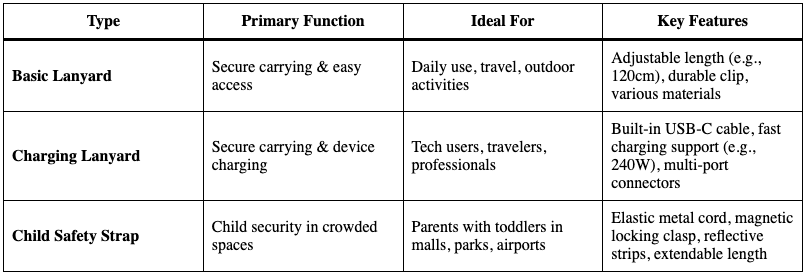
These are the workhorses of the category, designed primarily for secure carrying and easy access. A typical neck lock lanyard features an adjustable strap, often around 120cm in length, allowing it to be worn comfortably across the body or around the neck . The critical component is the connector—a ultra-thin metal clip or a D-ring that can be easily attached to a dedicated loop on a phone case or a keyring. Made from materials like nylon, polypropylene fiber, or even luxurious golden chains, these lanyards are ideal for keeping your phone secure during travel, concerts, or outdoor activities like cycling and dog walking, ensuring your device doesn’t slip from your grasp .
3.2. Multi-Functional Charging Lanyards
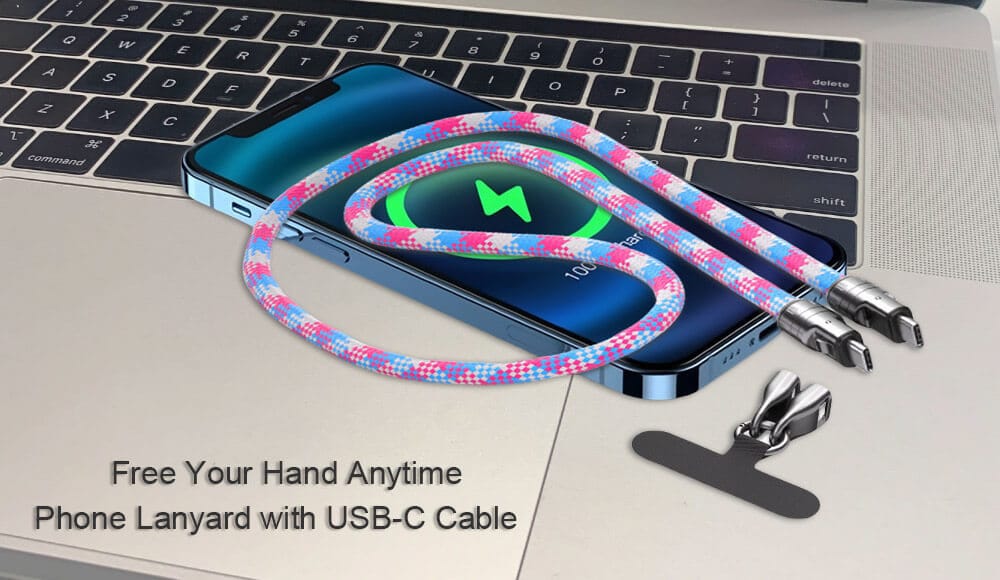
This category represents a significant leap in functionality, merging security with essential power needs. Imagine a lanyard that not only keeps your phone secure but also charges it. These innovative products, such as the “LENNY E,” combine a standard nylon lanyard with a built-in charging cable . The most advanced versions now feature USB C cables to support modern smartphones and fast-charging protocols. For instance, newer models on the market offer 240W fast charging via USB-C, making them a powerful tool for charging not just phones but also laptops and tablets . This two-in-one design means you can wear your lanyard with an ID badge or keys and then simply unplug it to charge your devices, eliminating the need to carry a separate cable.
3.3. Specialized Safety and Child Straps
For parents, the fear of a child wandering off in a crowded place is a constant concern. Anti-lost technology addresses this with specialized safety bracelets. These products typically consist of a comfortable wristband for the child and another for the parent, connected by a durable, elastic metal rope that can extend up to 1.5 or even 2.5 meters . Key safety features include an upgraded magnetic induction clasp that prevents the bracelet from being pulled or twisted off accidentally and reflective strips for high visibility at night . These straps provide children with a sense of freedom to move while giving parents confidence that their child is safe and within reach in supermarkets, parks, and airports.
Table: Comparison of Anti-Lost Strap Types
4. Key Features to Consider When Buying
Choosing the right anti-lost strap requires careful consideration of several factors to ensure it meets your needs.
- Attachment Mechanism: The clip or ring is what physically secures your device. Look for an ultra-thin clip that won’t interfere with wireless or corded charging, allowing you to charge your phone without removing the lanyard . The connection should be sturdy and reliable, with a 360-degree swivel head to prevent tangling .
- Durability and Material: The strap itself must be built to last. Common materials include high-strength nylon, braided fabric, and polypropylene fiber cord . For the tethering part of child safety straps, a stainless steel core wrapped in plastic offers exceptional strength and flexibility . Check the construction of the cord locks and fasteners to ensure they can withstand daily use.
- Functionality and Added Value: Decide if a single-use lanyard is sufficient or if you need a multi-functional model. A charging USB C cable integrated into the lanyard is a significant advantage, reducing what you need to carry and ensuring you always have a charging cable on hand . For child straps, added features like reflective strips for nighttime safety are invaluable .
- Comfort and Adjustability: A strap that is uncomfortable will not be used. Ensure the length is adjustable to fit your preferred wearing style, whether as a crossbody strap or a shorter wrist loop. Padded sections or soft, skin-friendly materials can greatly enhance comfort, especially for all-day wear.
5. The Future of Anti-Lost Solutions
The trajectory of anti-lost technology points towards even greater integration and intelligence. We are already seeing the convergence of physical tethers and smart digital tracking. Future anti-lost lanyards may incorporate miniaturized Bluetooth trackers directly into their design, allowing you to trigger an alarm on the strap itself from your phone or see its last known location on a map . As the Internet of Things (IoT) expands, these straps could communicate with other smart devices, automatically silencing your phone when you lift it to your ear or triggering “away” modes on your smart home when you leave.
Furthermore, the power delivery capabilities of charging lanyards will continue to advance alongside charging standards, potentially supporting even faster charging speeds and universal compatibility. The focus will also remain on sustainable materials and customizable, fashion-forward designs, transforming the anti-lost strap from a utilitarian tool into a personalized tech-fashion statement.

6. Conclusion
In conclusion, the humble anti-lost strap has matured into an indispensable accessory for the modern individual. It effectively bridges the gap between security and convenience, offering solutions that range from simple mechanical tethers to sophisticated, multi-functional tools that power our devices. Whether you opt for a sleek neck lock lanyard for your phone, a powerful charging lanyard to consolidate your carry, or a dedicated safety strap for your child, you are investing in peace of mind. By considering your specific needs and the key features outlined in this guide, you can select an anti-lost strap that seamlessly integrates into your life, ensuring your valuable items—and loved ones—remain secure no matter where you go.