

In this article, you will read contents as below-
- Introduction: Why Phone Charger Quality Matters
- Step 1: Verify Safety Certifications and Compliance
- Step 2: Check Power Specifications and Standards
- Step 3: Evaluate Build Quality and Design
- Step 4: Research Brand Reputation and Reviews
- Step 5: Consider Your Specific Device Needs
- Special Considerations for Wholesale Purchasing
- How to Test Phone Charger Performance
- Red Flags: What to Avoid
- Conclusion: Making the Right Choice
Introduction: Why Phone Charger Quality Matters
A reliable phone charger is crucial in today’s world. It’s not just about convenience; it also ensures your device lasts, stays safe, and performs well. Choosing the right one is key.Using a poor quality charger may damage your electronics, create a fire hazard, or provide inadequate charging speeds.With so many options such as Power Delivery (PD), Quick Charge (QC), and Gallium Nitride (GaN) technology coming out, it’s really important to know how to judge a charger’s quality. I often tell people to consider the specifications carefully before making a purchase. This approach helps ensure you get what you need.
This guide shows you how to check if a charger is good, covering different points. We start by discussing safety and then move on to performance metrics. Our aim is to provide insight into aspects like voltage and current output. The information presented here should help you make an informed decision when evaluating chargers.Making informed decisions is key, whether you are buying for yourself or considering wholesale options for your business. Understanding the technical specifications will help you protect your devices and your investment.

Step 1: Verify Safety Certifications and Compliance
The most critical aspect of any charger is its safety, which begins with proper certifications. These certifications indicate that the charger has undergone rigorous testing by independent organizations.
Essential Safety Certifications:
- UL (Underwriters Laboratories): A highly respected U.S.-based safety certification
- CE (Conformité Européenne): Indicates compliance with European health, safety, and environmental standards
- FCC (Federal Communications Commission): Ensures electromagnetic interference is within safe limits
- RoHS (Restriction of Hazardous Substances): Confirms the charger doesn’t contain harmful materials like lead or mercury
What to Look For:
Always check the charger body for certification marks. Genuine certifications will have specific markings, not just logos printed on the packaging. For wholesale purchases, especially when considering GaN chargers wholesale or PD Chargers wholesale, request documentation proving these certifications. Reputable manufacturers will provide test reports and certification numbers you can verify online.
Step 2: Check Phone Charger Power Specifications and Standards
Understanding power specifications helps ensure compatibility with your devices and optimal charging performance.
Key Specifications to Examine:
Output Standards:
- Power Delivery (PD): A universal fast-charging standard that allows devices and chargers to negotiate optimal voltage and current. Essential for modern laptops, tablets, and smartphones.
- Quick Charge (QC): Qualcomm’s fast-charging technology, particularly common in Android devices. Various versions exist (QC 2.0, 3.0, 4+, 5), each with different capabilities.
- PPS (Programmable Power Supply): An advanced feature allowing fine-tuned voltage adjustments for more efficient charging and reduced heat generation.
Voltage and Current Specifications:
Please verify that your charger delivers the correct voltage, which is usually 5V, 9V, 12V, 15V, or 20V for power delivery chargers, and enough current for your devices. Higher wattage chargers, such as those rated at 65W or 100W, are capable of charging larger devices, including laptops.
Gallium Nitride (GaN) Technology:
GaN chargers use gallium nitride instead of traditional silicon, allowing for smaller, more efficient chargers that generate less heat. When you are looking at GaN chargers wholesale, it is important to confirm that they actually incorporate Gallium Nitride technology instead of just making marketing claims.
Step 3: Evaluate Build Quality and Design
A physical inspection tells you a great deal about a charger’s quality and durability.
Exterior Construction:
- Please select durable materials that do not have sharp edges or seams.
- Ensure the feel is solid and well-finished, with no creaking or flexing evident.
- Check that all ports have tight, secure attachments. There shouldn’t be much play in them.ns without excessive wiggle.
Cable and Port Quality:
- When using USB-C chargers, it is important to confirm the port has a 56kΩ pull-up resistor. This is critical for safety.
- Please ensure that any included cables are built to last, with reinforced areas where they might experience wear.
- Please ensure each port is securely attached to the circuit board.
Thermal Management:
Good chargers are designed with mechanisms for handling heat. GaN chargers should run particularly cool compared to traditional designs.
Weight and Size:
While not definitive, unusually light chargers might suggest substandard components or missing safety elements. This could be a consideration for future purchases. When looking to purchase QC chargers or other items in bulk, it is a sound practice to request samples for a physical inspection before placing large orders. This due diligence ensures quality and helps make informed decisions.
Step 4: Research Brand Reputation and Reviews
Brand reputation offers valuable insights into charger quality and manufacturer reliability.
Established vs. Unknown Brands:
Established brands generally have a greater stake in their reputation and thus tend to dedicate more resources to ensuring product quality and supporting their customers.Some newer brands focusing on GaN chargers wholesale could provide fresh designs at good value.
Review Analysis:
Look beyond star ratings to read detailed reviews mentioning:
- Long-term durability and performance
- Actual charging speeds with specific devices
- Heat generation during use
- Customer service experiences for defective products
Professional Testing:
Technology websites and YouTube channels often conduct in-depth charger testing using specialized equipment. These reviews provide objective performance data beyond marketing claims.
Step 5: Consider Your Specific Device Needs
A “good” charger depends largely on what you need to charge.
Device Compatibility:
- Apple devices: Prioritize PD-certified chargers
- Samsung devices: Look for PPS support alongside PD
- Gaming phones: May benefit from specialized standards like Qualcomm’s Quick Charge
- Laptops: Require higher wattage PD chargers (typically 45W+)
Multi-Device Charging:
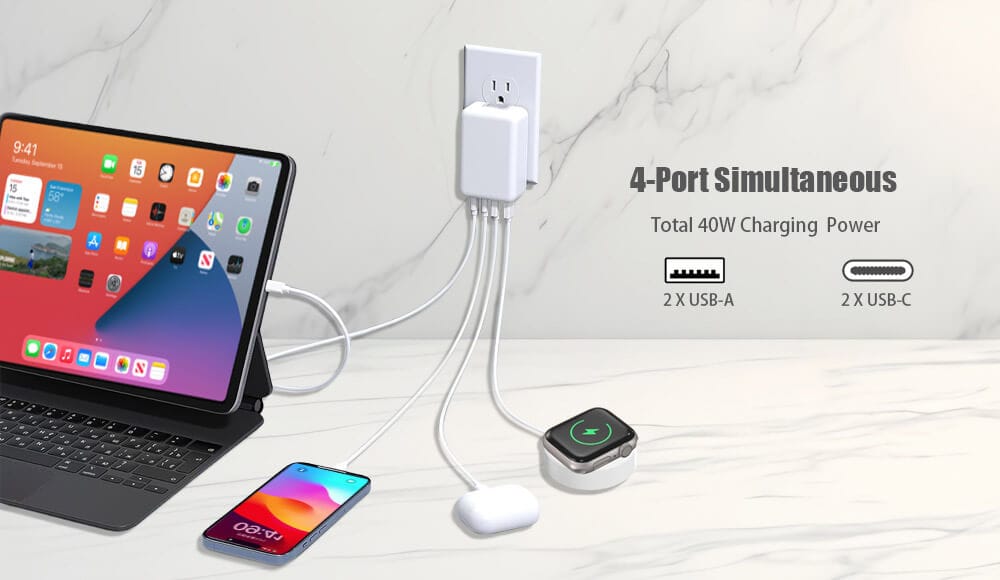
If you need to charge multiple devices simultaneously, consider total power distribution. A 100W charger with multiple ports might only deliver 65W to one port and split the remainder among others.
Portability Requirements:
For travel, smaller GaN chargers offer significant space savings. When evaluating PD Chargers wholesale for resale, consider offering different sizes and port configurations to meet various customer needs.
Special Considerations for Wholesale Purchasing
Wholesale purchasing introduces additional factors to consider for both business viability and customer safety.
Verification for Bulk Orders:
- Request detailed specifications sheets for all models
- Ask for certification documents specific to the production batch
- Consider third-party testing for large orders, especially when exploring new QC chargers wholesale suppliers
Minimum Order Quantities (MOQs):
Balance quantity discounts against inventory risk. Start with smaller test orders when working with new suppliers, even if per-unit costs are slightly higher.
Warranty and Support:
- Clarify warranty terms for wholesale purchases
- Establish procedures for handling defective units
- Determine who handles customer warranty claims
Customization Options:
Many wholesale suppliers offer branding opportunities. Ensure any customization doesn’t void certifications or compromise safety features.
How to Test Phone Charger Performance
Once you have a phone charger, several tests can verify its performance.
Basic Functionality Test:
- Visually inspect for physical damage
- Check that all ports work with various cables
- Monitor heat generation during use (should be warm, not hot)
- Listen for unusual buzzing or crackling sounds
Performance Benchmarks:
- Use a USB power meter to measure actual voltage and current output
- Time how long it takes to charge specific devices from 0% to 50%, 80%, and 100%
- Test with different cable combinations as cable quality affects performance
Compatibility Testing:
- Verify the charger works with all your devices
- Check that fast-charging protocols activate properly
- Test simultaneous multi-device charging
Red Flags: What to Avoid
Certain warning signs indicate potentially dangerous or poor-quality chargers.
Safety Red Flags:
- Missing or suspicious certification markings
- Incorrect pin configurations for your region
- Excessive heat during normal use
- Buzzing, crackling, or burning smells
Performance Warning Signs:
- Significantly slower charging than advertised
- Inconsistent charging (frequently connecting/disconnecting)
- Interference with nearby electronics like speakers or radios
Packaging and Marketing Red Flags:
- Vague or exaggerated claims without specifics
- Poor quality packaging with spelling errors
- Lack of manufacturer contact information
- Prices dramatically lower than comparable products
Conclusion: Making the Right Choice for your phone charger
To select a suitable charger, one must consider its safety features, the performance it offers, its compatibility with your device, and its overall build quality.To pick chargers well, verify certifications. Understand what a charger is designed to do. Always evaluate how it’s built and research the maker’s reputation. Testing performance yourself is also a good step. With care, you can choose devices that work.
When sourcing PD Chargers wholesale, QC chargers wholesale, or GaN chargers wholesale, these evaluation principles are important. The choices you make can influence your reputation and customer well-being.When selecting chargers for your inventory, it is essential to prioritize certified products from well-regarded manufacturers. Even if the initial cost is somewhat higher, the potential repercussions of distributing unsafe chargers outweigh any temporary savings. This standard helps ensure product quality.
Think about how charger technology keeps changing.Being aware of new developments and technical specifications is important. At the same time, we must remember that foundational principles of safety and dependability are always relevant. These core aspects really are timeless.By carefully assessing and continuing your education, you can make sure each charger you acquire or offer for sale meets strict quality and performance standards.