

In the modern era of smartphones, battery life is the crown jewel of user experience. We have all experienced the familiar pang of anxiety when our battery dips below 20% with no outlet in sight. To solve this, manufacturers have poured billions into research and development to shrink charging times. Today, the market is flooded with terms designed to sound impressive: “Super Fast Charging,” “Turbo Charge,” “Quick Charge,” and “Flash Charge.”For the average consumer, these terms are more confusing than clarifying. However, the two most common buzzwords you will encounter are Fast Charger and Flash Charger. While they sound synonymous, they represent fundamentally different philosophies in electrical engineering, heat management, and user convenience.
If you have ever wondered why your friend’s OnePlus charges to 100% in 20 minutes while your Samsung takes an hour, or why a generic charger never seems to unlock the “super speed” on your OPPO, you are in the right place. This comprehensive guide will dissect the technical differences, weigh the pros and cons, and help you decide which technology fits your lifestyle.
Defining the Terms: Beyond the Marketing Jargon
Before we dive into the technical nitty-gritty, we must establish a baseline definition.
What is a Fast Charger?
“Fast Charger” is a generic, umbrella term. It refers to any charging technology that delivers power to a device at a rate significantly higher than the old USB standard (which was 5 Volts at 1 Ampere, totaling 5 Watts). Fast charging is the “common language” of power delivery. It relies on universal or semi-universal standards like USB Power Delivery (USB-PD) and Qualcomm Quick Charge. These protocols are designed to be interoperable. You can take a USB-PD fast charger, plug it into a MacBook, an iPhone, a Samsung Galaxy, or a Nintendo Switch, and it will deliver fast charging to all of them, albeit at different speeds.
What is a Flash Charger?
“Flash Charger” (also known by specific brand names like VOOC, SuperVOOC, Dash Charge, or Warp Charge) is a proprietary technology. It was pioneered by Chinese manufacturers BBK Electronics (parent company of OPPO, OnePlus, Vivo, and Realme) as a response to the shortcomings of traditional fast charging. Flash charging is not a standard you can license easily; it is a closed ecosystem. To achieve “Flash” speeds, you must use the specific brick, the specific cable, and the specific phone that are all engineered to work together. If you swap out the cable for a generic one from a gas station, your phone will charge slowly.
The Core Technical Difference: Voltage vs. Current
To understand which charger is “better,” you need a basic grasp of physics. Power (Watts) is calculated by multiplying Voltage (V) by Current (Amperes/A). To get high wattage (and thus fast speeds), you have two choices:
- Keep voltage low and current high.
- Keep current low and voltage high.
How Fast Chargers Work (High Voltage Strategy)
Traditional Fast Chargers, like Qualcomm Quick Charge 3.0/4.0 and USB-PD, employ a High Voltage strategy. They push power through the USB cable at higher voltages—typically 9V, 12V, or even 20V—while keeping the current around 1.5A to 3A.
The “choke point” here is the USB cable itself. Standard USB cables have a maximum current limit. If you try to push 6 amps through a cheap cable, it will melt or catch fire. So, to circumvent this, fast chargers raise the voltage. When the power reaches the phone, a component inside the device called a PMIC (Power Management Integrated Circuit) steps that high voltage down to the 3.7V to 4.4V that the battery actually needs.
The Drawback: This conversion process (bucking voltage down) is inefficient and creates significant heat inside the phone’s motherboard. Heat is the mortal enemy of lithium-ion batteries. High temperatures degrade battery chemistry, reducing the overall lifespan of the battery.
How Flash Chargers Work (High Current Strategy)
Flash Chargers (VOOC/Warp) take the exact opposite approach. They utilize a High Current, Low Voltage strategy (e.g., 5V at 4A to 6.5A, or even 10V at 6.5A in newer iterations).
To achieve this, they don’t use the standard USB power pins. They use modified USB-A or USB-C cables with thicker, reinforced pins and extra data pins to identify the phone. The “heavy lifting”—the voltage conversion—happens inside the charger brick, not inside the phone.
Because the voltage is already matched to the battery’s needs when it enters the phone, the phone doesn’t need a heavy-duty conversion circuit.
The Advantage: This generates drastically less heat in the phone. The heat is dissipated by the charger brick itself, which is safely sitting on the table away from the delicate battery cells. This allows flash chargers to push insane amounts of power—today’s SuperVOOC 2.0 can hit 100W, and the latest 240W offerings can charge a phone in under 10 minutes—without cooking the battery.
Speed Comparison: How Much Faster is “Flash”?
It is a mistake to assume that “Flash” is always faster than “Fast.” The term “Fast” covers a vast spectrum.
- Standard Fast Charging (18W – 25W): Will take a 4000mAh battery from 0% to about 50% in 30 minutes.
- High-End Fast Charging (45W – 65W via USB-PD): Can fill a laptop or large phone battery in about 1 hour. For example, Samsung’s 45W fast charging fills a Galaxy S24 Ultra to 65% in 30 minutes.
- Flash Charging (65W – 150W): This is where physics gets mind-bending. A 150W SuperVOOC charger can take a 4500mAh battery to 100% in about 15 minutes.
- Extreme Flash Charging (240W+): Realme’s 240W flash charge can get a phone to 100% in approximately 9 minutes.
The Bottleneck: It is worth noting that both fast and flash chargers “slow down” significantly in the final 20% of the charge cycle to protect the battery. The incredible speed of flash charging is most evident in the “emergency” zone—getting you 60% battery in just 5 minutes so you can get through the day.
Compatibility: The Wall and the Garden
This is the single most significant differentiating factor, and it often determines which charger is better for the average user.
The Universal Fast Charger
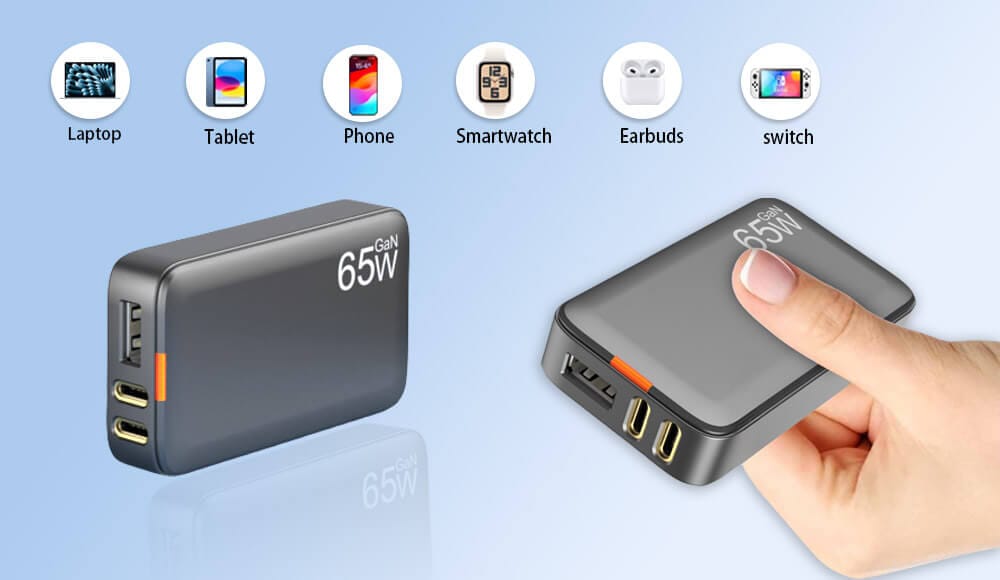
Fast chargers are standardized. If you buy a 65W GaN (Gallium Nitride) USB-PD charger on Amazon, it will fast-charge your Dell laptop, your Steam Deck, your iPhone, and your Android phone.
- Future-Proofing: Because the industry is coalescing around USB-PD, you can expect your fast charger to work with your next phone, regardless of the brand.
- Cable Flexibility: You can use any high-quality 5A or 100W-rated USB-C cable to achieve fast charging speeds. If you lose the cable, it costs $10 to replace.
The Proprietary Flash Charger
Flash charging is a “walled garden.”
- Brand Lock-in: A OnePlus Warp Charger will not flash-charge an OPPO phone (unless the brands share a codebase, which they sometimes do), and it will definitely not work with a Samsung or Google Pixel.
- Cable Sensitivity: Flash charging requires a cable with an extra pin or a specific chip inside it to negotiate the high current. If you use a standard cable, the charger defaults to a safe, slow 5V/2A speed. The cables are also thicker and more rigid. Losing a proprietary flash cable means you must spend $20–$30 on a brand-specific replacement just to get your speed back.
Heat Management and Battery Health Degradation
This is the most controversial topic in the charging world. Does fast charging ruin your battery?
Fast Charging (High Voltage):
Because the phone handles the voltage conversion, fast charging generates moderate to high heat inside the chassis. If you are gaming while fast charging, temperatures can exceed 40°C. Prolonged exposure to these temperatures can degrade the battery’s chemical structure, reducing the total capacity (mAh) over 1–2 years. However, modern phones are smart; they throttle the charging speed if they detect the device getting too hot.
Flash Charging (High Current):
Flash charging is generally considered safer for your phone regarding long-term heat damage. Since the heat is dissipated in the brick, the phone stays cool even while pulling 150W. This allows the phone to sustain peak charging speeds for longer periods without throttling.
However, there is a caveat: The Charger Brick gets very hot. In fact, some flash chargers can reach temperatures of 60°C to 70°C, which is fine for the brick but can be a fire hazard if covered by a blanket or placed in a confined space. Furthermore, because flash charging pumps immense current so quickly, it can cause micro-stresses on the battery’s anode, leading to faster “cycle wear” compared to a standard 5W charge. But with battery replacement costs being relatively low, most users accept this trade-off for the sheer convenience.
The Cable and Port Durability
This is an often-overlooked aspect of the charger debate.
Fast Chargers: Because they rely on high voltage and lower current, the cables are physically lightweight. You can wrap them tightly, bend them, and take them on the go without much worry. The connectors are standard USB-A to USB-C or C to C.
Flash Chargers: The cables are thick, heavy, and less flexible because they need to carry a massive current load safely. The contact pins are often wider. While this makes them more durable in terms of avoiding cable snaps, the port on the phone wears out faster. Inserting and removing a thick, heavy cable repeatedly puts more mechanical stress on the USB port. If your flash-charging port gets loose, you lose your fast charging capability entirely until you get the port repaired.
Practical Scenarios: Who Should Buy What?
Choosing between a Fast Charger and a Flash Charger isn’t about which is “better” in a vacuum; it is about your ecosystem and lifestyle.
Scenario 1: The Digital Nomad / Multi-Device User
Best Choice: Fast Charger (USB-PD).
If you carry a laptop, tablet, wireless earbuds, and a phone, you cannot afford a proprietary flash charger. You need a single 100W GaN fast charger that plugs into the wall and charges all your devices simultaneously. Flash chargers are usually single-port (or dual-port but lack the power distribution for laptops).
Scenario 2: The Emergency User / Gamer
Best Choice: Flash Charger.
If you are constantly rushing out the door, forget to charge overnight, and need 100% power in 15 minutes, a flash charger is a lifesaver. Also, if you play resource-intensive games like Genshin Impact that drain the battery quickly, the ability to “top up” in 5 minutes and play for another hour is revolutionary.
Scenario 3: The Consumer on a Budget
Best Choice: Fast Charger.
Proprietary flash chargers are expensive. The brick and cable bundle can cost upwards of $50. Conversely, high-quality 33W to 65W fast chargers from third-party brands (like Anker, Ugreen, or Baseus) are available for $15-$25. They provide excellent speed without the price premium.
Scenario 4: The Overnight Charger
Best Choice: Neither.
If you charge your phone exclusively while you sleep (for 7-8 hours), you should not be using Fast or Flash charging. You should use a slow 5W or 10W charger. Leaving a high-powered charger plugged in overnight keeps the battery at 100% and induces trickle-charging stress. For overnight use, slow and steady wins the race.
The Future: Is the Gap Closing?
The technological frontier is blurring the lines between Fast and Flash. In 2026, we are seeing the introduction of Universal Flash Storage (UFS) Charging and updates to the USB-PD standard that now support up to 240W on standard C-to-C cables.
- USB-PD 3.1 supports 240W charging using standard voltages (up to 48V).
- However, at 48V, the phone still has to do the voltage step-down, meaning the phone will experience severe heat unless brand-new heat-dissipating materials (like vapor chambers) are used.
Conversely, Flash charging brands are starting to support USB-PD standards. For example, the latest SuperVOOC chargers often come with a second port that outputs standard USB-PD 65W to charge laptops, while the main port retains the proprietary flash protocol.
The future likely holds a hybrid approach: Smart chargers that can switch between High Voltage (for laptops/generic devices) and High Current (for flash-compatible phones) automatically.
Safety Considerations
Both technologies are certified by safety boards (CE, UL, FCC) and are generally safe. However, here is a cheat sheet for safety:
- Fast Charging: Prone to overheating if the phone is in a thick case. Always remove heavy-duty cases when fast charging.
- Flash Charging: The cable is the weak point. If you notice the cable fraying or getting unusually hot, stop using it immediately. A short circuit with high current is dangerous. Always use the official cable, never a cheap knockoff, for flash charging.
Making Your Final Decision
When you strip away the marketing hype, the choice is clear and depends entirely on your use case.
Choose a Fast Charger (USB-PD/Quick Charge) if you value versatility, affordability, and ecosystem compatibility. It is the “Jack of all trades” that will serve your laptop, phone, and accessories well. It is the logical choice if you don’t want to be locked into a single brand. While it may generate more heat inside the phone, modern thermal management systems mitigate this effectively for charging sessions under 30 minutes.
Choose a Flash Charger (VOOC/Warp/Dash) if you are deeply invested in a specific brand ecosystem and prioritize extreme speed and low phone temperatures above all else. If you are an OPPO, OnePlus, or Realme user and are willing to pay a premium for proprietary cables and bricks, the sheer convenience of a 10-minute charge is unparalleled.
In the end, both technologies represent the brilliance of modern engineering. Fast charging is the standard that connects the world, while flash charging is the premium experience that pushes the boundaries of what is physically possible. Whether you choose the universal path or the walled garden, you are moving far away from the dark ages of overnight 5W charging.
To Know More-
The Secret Language of Symbols on Your Phone Charger
Why Your 65W USB-C Cable Drops to 5V 2A
When Should You Replace Your Phone Charger? 7 Warning Signs You Must Know
USB Charging Cable vs. USB Data Cable